-
-

-
- HOME
- MOVIES
- TV-SERIES
- WATCHED
- LAST ADDED
- RELEASE
-
GENRES
- All
- Action
- Adventure
- Animation
- Benefit concert
- Biography
- Christmas
- Comedy
- Costume
- Crime
- Documentary
- Drama
- Family
- Fantasy
- Game-Show
- Historical fiction
- History
- Horror
- Kung-Fu
- Music
- Musical
- Mystery
- Mythological
- News
- Psychological
- Reality-TV
- Romance
- Sci-Fi
- Short
- Sitcoms
- Sport
- Stand-up Comedy
- Talk-Show
- Thriller
- TV Show
- War
- Western
-
COUNTRY
- All
- Afghanistan
- Argentina
- Armenia
- Asia
- Australia
- Austria
- Bahamas
- Bangladesh
- Belgium
- Belize
- Bolivia
- Bosnia and Herzegovina
- Brazil
- Bulgaria
- Cambodia
- Canada
- Chile
- China
- Colombia
- Croatia
- Cuba
- Czech Republic
- Denmark
- Dominican Republic
- Euro
- Finland
- France
- Georgia
- Germany
- Greece
- Hong Kong
- Hungary
- Iceland
- India
- Indonesia
- International
- Iran
- Ireland
- Israel
- Italy
- Japan
- Jordan
- Kenya
- Korea
- Lebanon
- Lithuania
- Luxembourg
- Malaysia
- Mali
- Malta
- Mexico
- Mongolia
- Morocco
- Netherlands
- New Zealand
- Nigeria
- Norway
- Pakistan
- Palestine
- Panama
- Peru
- Philippines
- Poland
- Portugal
- Romania
- Russia
- Samoa
- Senegal
- Serbia
- Singapore
- Slovenia
- Somalia
- South Africa
- South Korea
- Spain
- Sudan
- Sweden
- Switzerland
- Taiwan
- Thailand
- Trinidad and Tobago
- Turkey
- Uganda
- Ukraine
- United Arab Emirates
- United Kingdom
- United States
- Uruguay
- Venezuela
- Vietnam
- TOP-IMDB
-
FeedbackFeedback about this page?CancelSend feedback
-
Filter
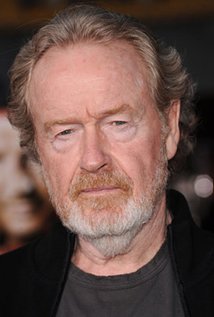
Ridley Scott
Birthday: 30 November 1937, South Shields, Tyne and Wear, England, UK
Height: 174 cm
Ridley Scott was born in South Shields, Tyne and Wear (then County Durham) on 30 November 1937. His father was an officer in the Royal Engineers and the family followed him as his career posted him throughout the UK and Europe before they eventually returned to Teesside.Scott wanted to join Army (his elder brother Frank had already joined the Merch...
Show more »
Ridley Scott was born in South Shields, Tyne and Wear (then County Durham) on 30 November 1937. His father was an officer in the Royal Engineers and the family followed him as his career posted him throughout the UK and Europe before they eventually returned to Teesside.Scott wanted to join Army (his elder brother Frank had already joined the Merchant Navy) but his father encouraged him to develop his artistic talents instead and so he went to West Hartlepool College of Art and then London's Royal College of Art where he helped found the film department.He joined BBC in 1962 as trainee set designer working on several high profile shows. He attended a trainee director's course while he was there and his first directing job was an episode of the prestigious BBC series Z Cars (1962), Z Cars: Error of Judgement (1965).More TV work followed until, frustrated by the poor financial rewards at the BBC, he went into advertising. With his younger brother, Tony Scott, he formed the advertising production company RSA (Ridley Scott Associates) in 1967 and spent the next 10 years making some of the best known and best loved TV adverts ever shown on British television, including a series of ads for Hovis bread set to the music of Dvorak's New World Symphony which are still talked about today ("'e were a great baker were our dad.")He began working with producer David Puttnam in the 1970s developing ideas for feature films. Their first joint endeavour, The Duellists (1977) won the Jury Prize for Best First Work at Cannes in 1977 and was nominated for the Palm d'Or, more than successfully launching Scott's feature film career.The success of Star Wars (1977) inspired Scott's return to sci-fi (he had been a production designer on the cult series Doctor Who (1963) while he was at the BBC) and he accepted the offer to direct Dan O'Bannon's low budget sci-fi horror movie Alien (1979), a critical and commercial success that firmly established his worldwide reputation as a movie director.Blade Runner (1982) followed in 1982 to, at best, a lukewarm reception from public and critics but in the years that followed, its reputation grew - and Scott's with it - as one of the most important sci-fi movies ever made.Scott's next major project was back in the advertising world where he created another of the most talked-about advertising spots in broadcast history when his "1984"-inspired ad for the new Apple Macintosh computer was aired during the Super Bowl on 22 January 1984.Scott's movie career has seen a few flops (notably Legend (1985) and 1492: Conquest of Paradise (1992)), but with successes like Thelma & Louise (1991), Gladiator (2000) and Black Hawk Down (2001) to offset them, his reputation remains solidly intact.Sir Ridley was knighted in 2003 for his "substantial contribution to the British film industry". Show less «
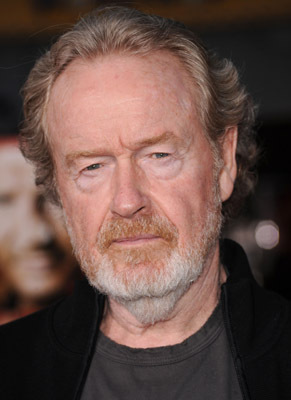
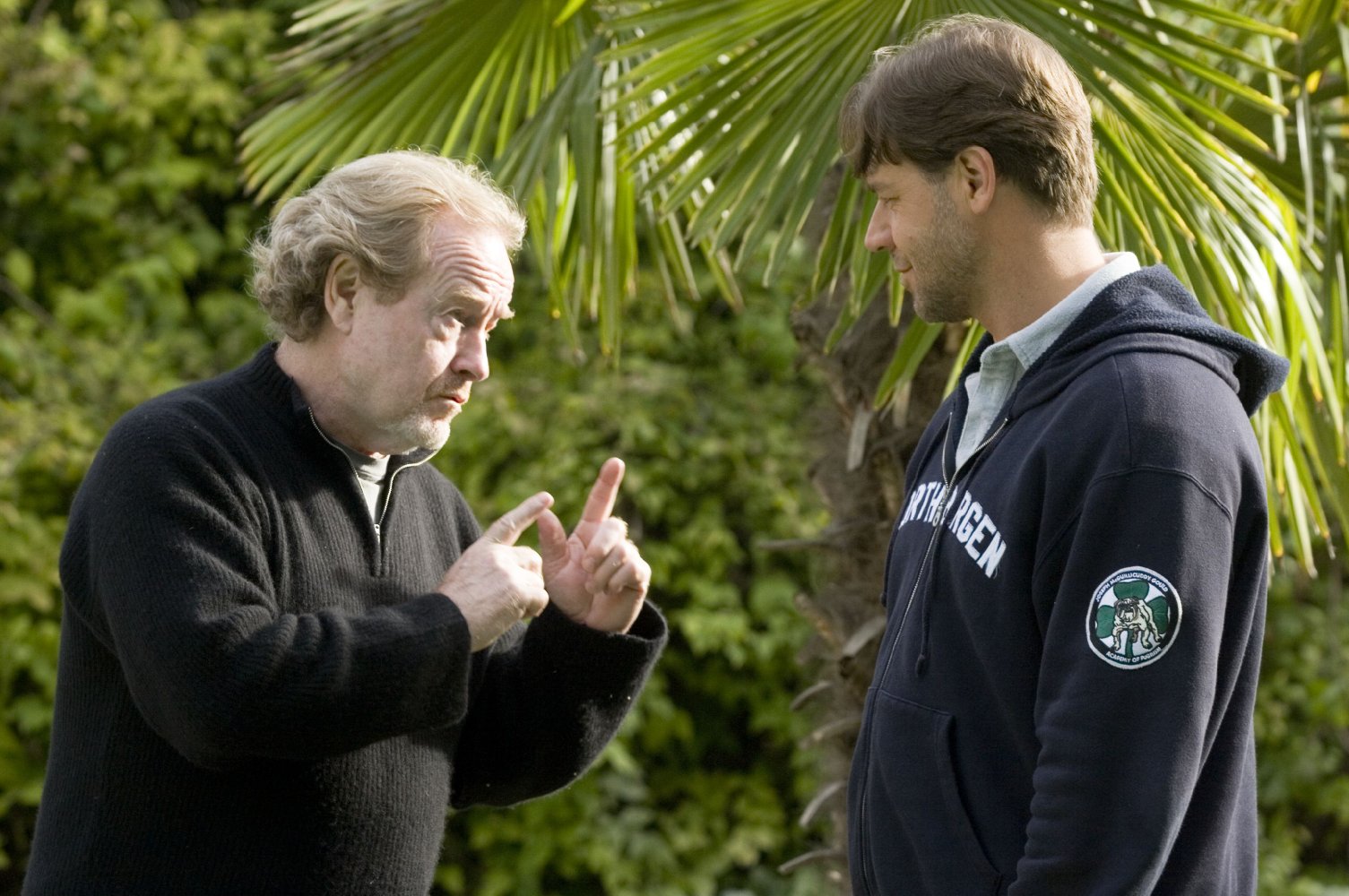
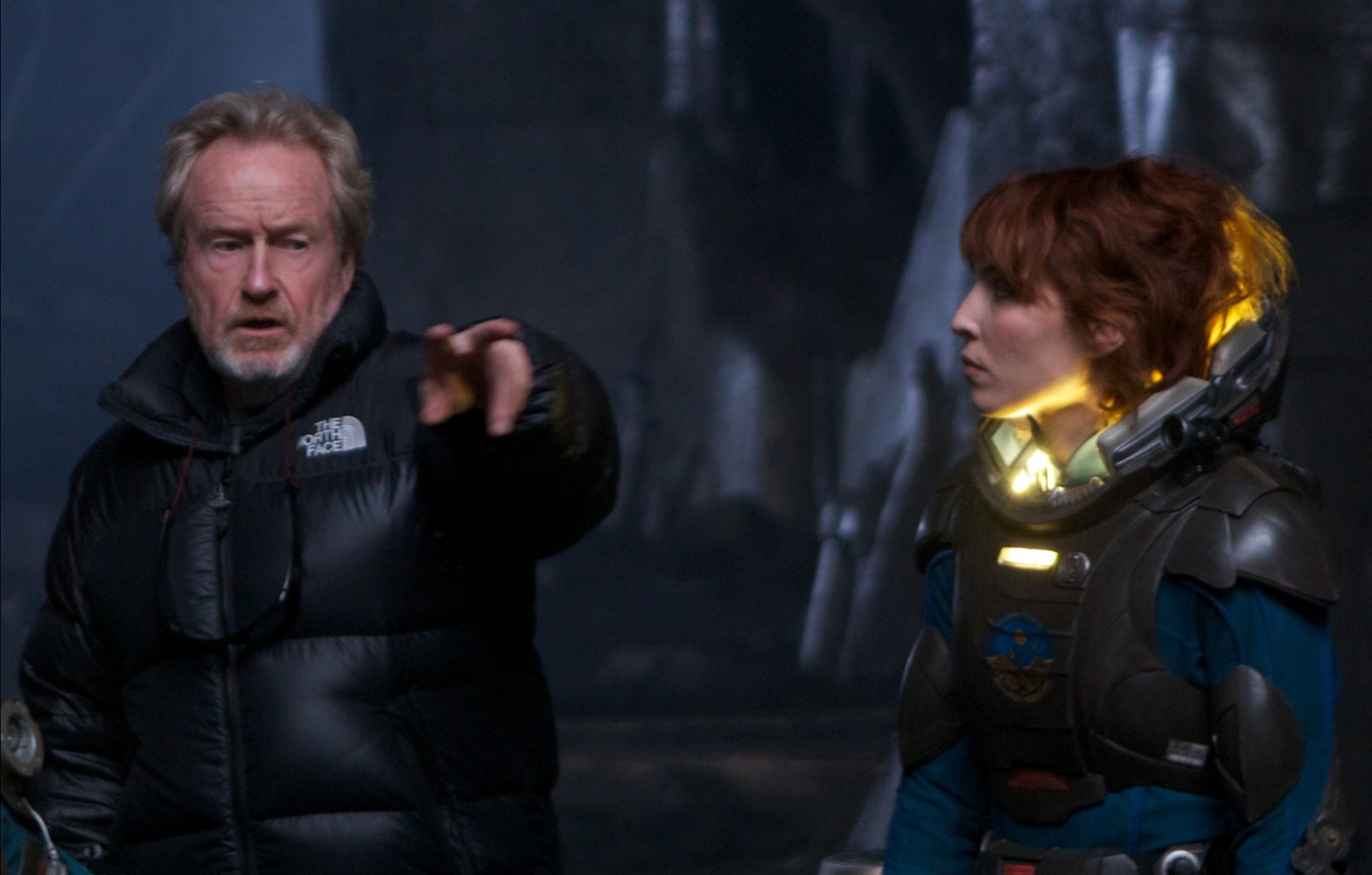
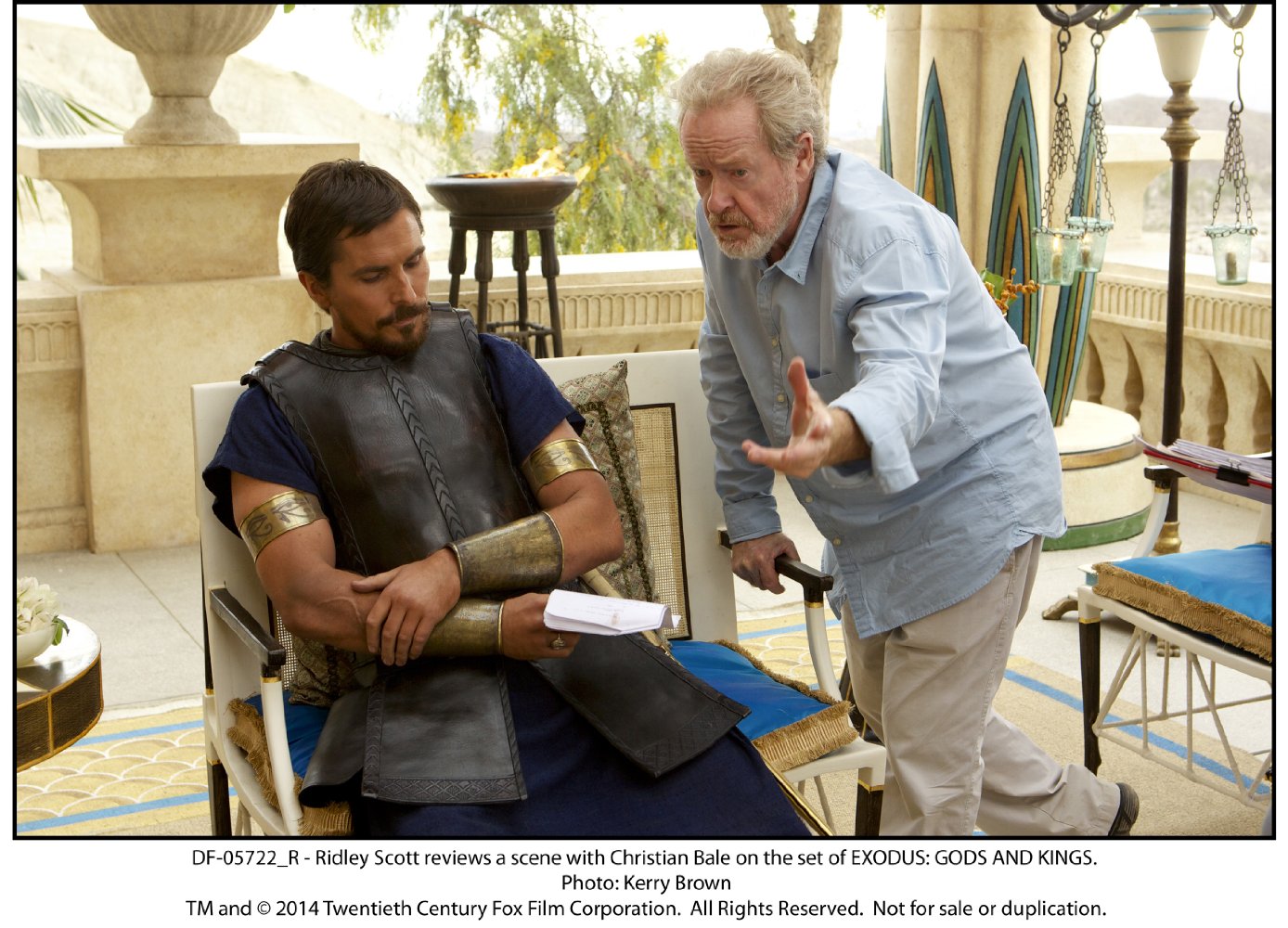
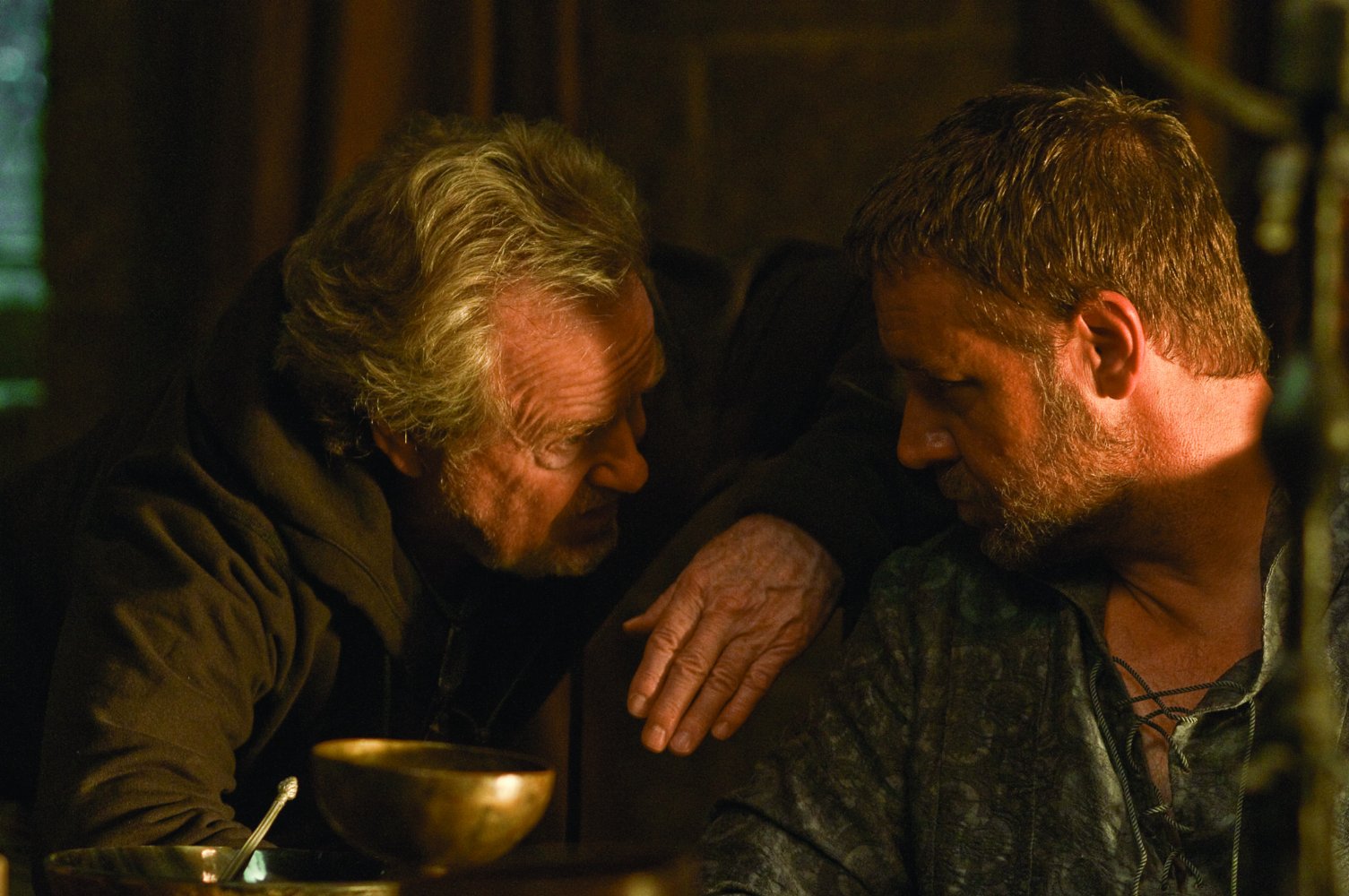
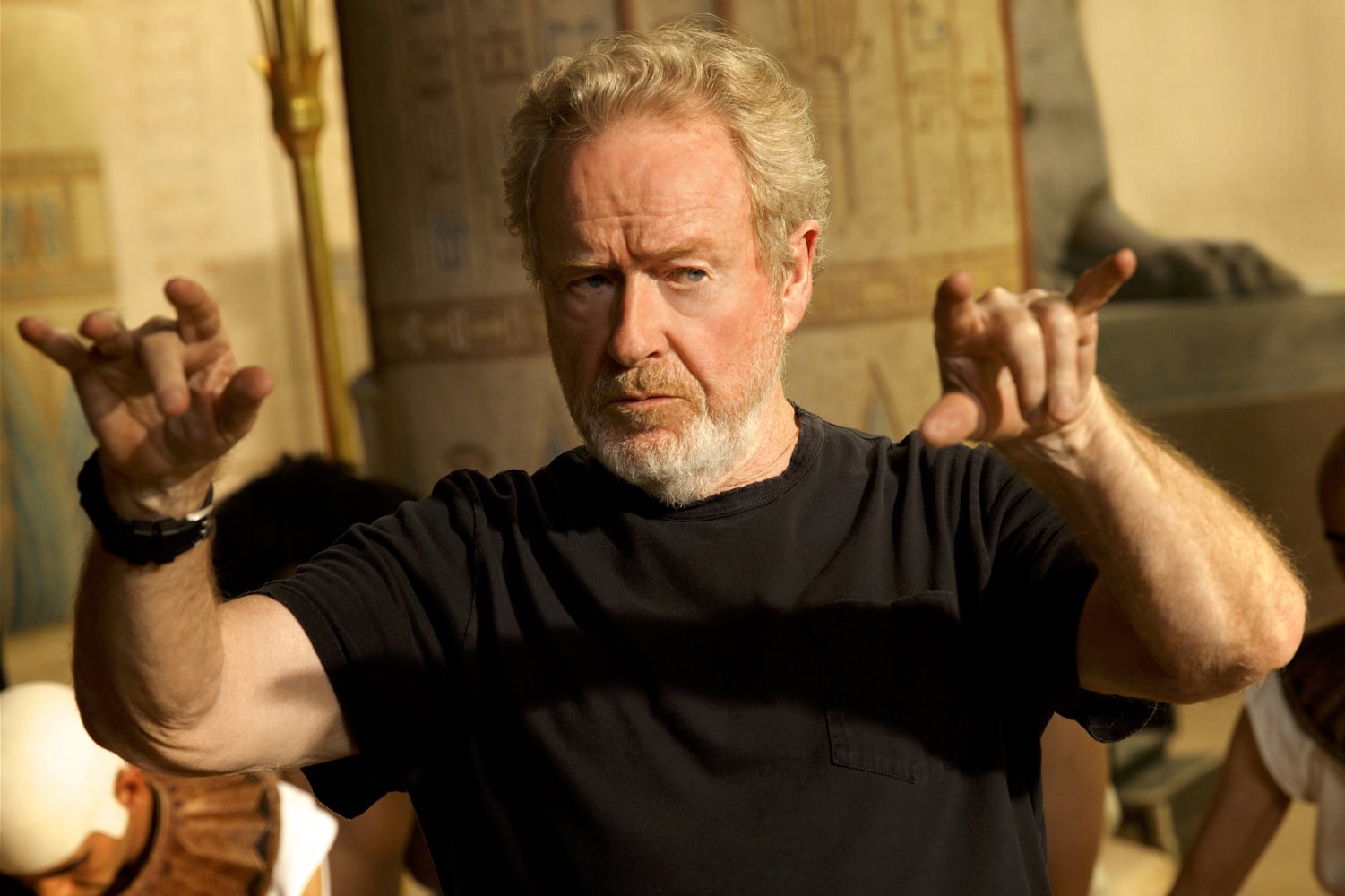
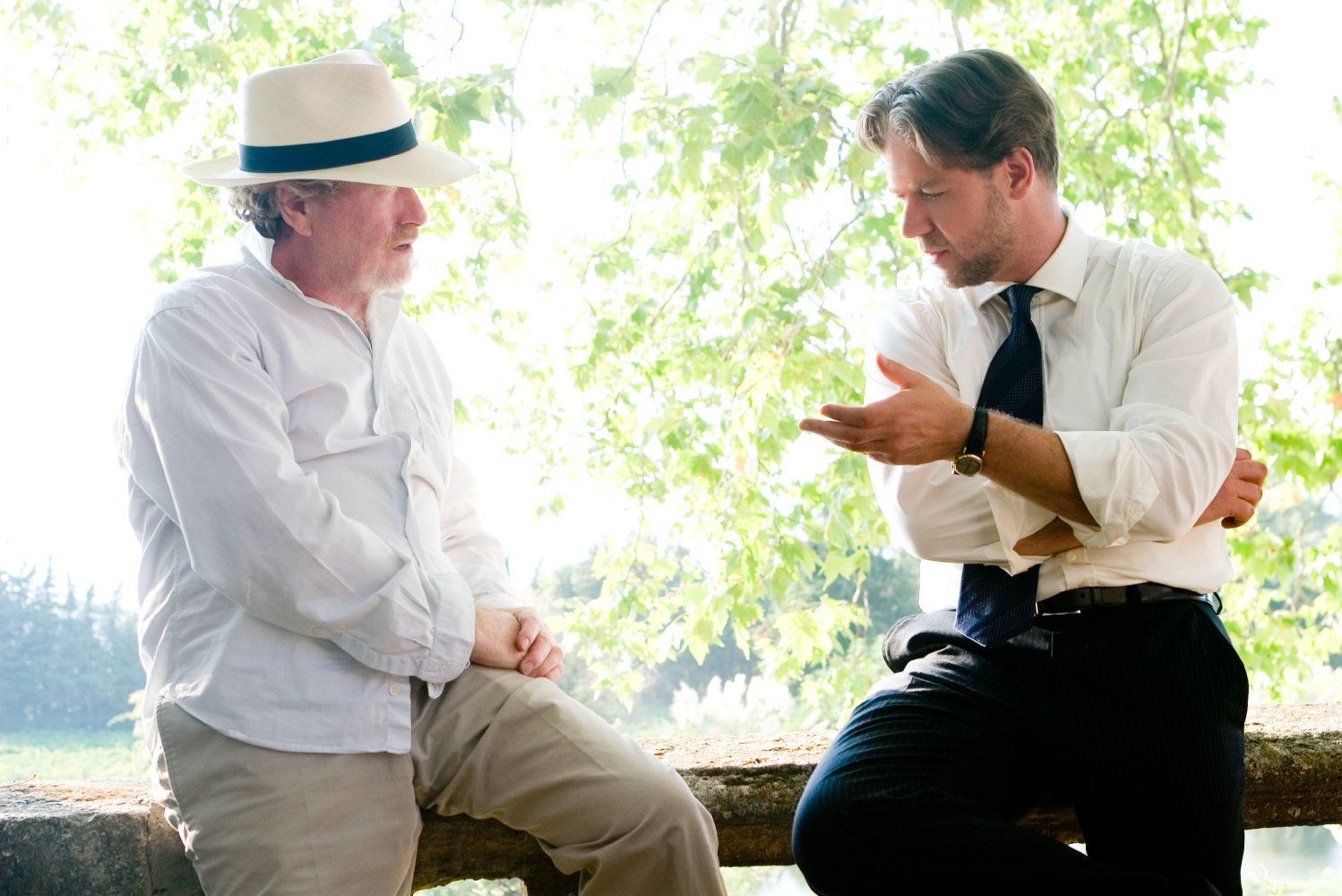
I was academically a disaster, honestly. (...) It wasn't because I was lazy; I'm inherently a multi-...Show more »
I was academically a disaster, honestly. (...) It wasn't because I was lazy; I'm inherently a multi-tasker, but I could not grasp or retain the information that was coming at me. (...) The saying then was that those who can, do; those who can't, go to art school. [2015] Show less «
The Martian (2015) was made for the most part, 94 percent, in a Budapest studio [in Hungary]. With g...Show more »
The Martian (2015) was made for the most part, 94 percent, in a Budapest studio [in Hungary]. With green screen, I now can't tell what was studio and what was shot in Wadi Rum [desert in Jordan]. [2015] Show less «
[on Alien (1979) and the Xenomorph] We're getting closer and closer to the creation of the beasts - ...Show more »
[on Alien (1979) and the Xenomorph] We're getting closer and closer to the creation of the beasts - how and why they were created - and the first "Alien" film that I made over thirty years ago. [2015] Show less «
I think I'm blessed by the fact that I can draw. I've got an inner eye, definitely. At first I wasn'...Show more »
I think I'm blessed by the fact that I can draw. I've got an inner eye, definitely. At first I wasn't aware of it, and then after 2,000 commercials, there was a reason I was so busy. I was the most visual of all directors. That's why I was so flat-out successful, frankly. That's why I never did a film until I was 40. I didn't start filming until I was 40. I certainly appreciated what I had, and I started to acknowledge it, embrace it, and use it. I think visually. But I'm good with words, and I'm helpful with writers because I'll talk to them visually when I'm working. [2015] Show less «
I was very, very happy with The Counselor (2013). I think it was very cynical and too nihilistic for...Show more »
I was very, very happy with The Counselor (2013). I think it was very cynical and too nihilistic for some people, but I like nihilistic. [2015] Show less «
[on Blade Runner (1982)] I've never spent so much time with a writer. That was the real evolution of...Show more »
[on Blade Runner (1982)] I've never spent so much time with a writer. That was the real evolution of the story. Show less «
I don't really stop. Whatever I do, I'm on. But it's life isn't it? We're not here for that long. I ...Show more »
I don't really stop. Whatever I do, I'm on. But it's life isn't it? We're not here for that long. I don't feel vulnerable in any way. I'm lucky in that I'm in good health and the brain's still going. No, seriously! A lot of it is how you look after yourself, but a lot of it is also luck. Flat out luck. So working, in a funny kind of way, is a health factor. I think it's healthier. My dad retired five years younger than me. Retirees are retiring at 50. 60. What the hell are you going to do? I don't know. Pff! It's unthinkable for me to retire. That's why I love Clint [Eastwood], who's in his 80s and has already finished his next movie. God, he's faster than I am! [2015] Show less «
I've got no plan. I go from pillar to post randomly. I have this childlike fascination and thrill of...Show more »
I've got no plan. I go from pillar to post randomly. I have this childlike fascination and thrill of doing it. I was going to be doing what will be called Alien: Covenant (2017), which starts shooting next February, and we were struggling then with the screenplay there and then there was a phone call, somebody saying, "Listen, we've got this thing which is completely written called The Martian (2015)", and I said, "Huh." And I sped read it in an hour and by mid-afternoon, I talked to Fox and said, "I need to talk to Drew Goddard". [2015] Show less «
[on Blade Runner (1982)'s Final Cut] Like watching the film as it should have been 25 years ago in t...Show more »
[on Blade Runner (1982)'s Final Cut] Like watching the film as it should have been 25 years ago in the theatres but with a better sound mix. Show less «
A friend of mine says, "Art's like a shark. You've got to keep swimming, or else you drown." Keep bo...Show more »
A friend of mine says, "Art's like a shark. You've got to keep swimming, or else you drown." Keep bouncing around. People always ask me, "What's the plan?" There is no plan. I go to what fascinates me next. Show less «
[is interviewed while he draws] As we speak I'm literally drawing: I'm doing storyboards for the fil...Show more »
[is interviewed while he draws] As we speak I'm literally drawing: I'm doing storyboards for the film in January... I'm one of those people who can multitask - I'm drawing the bridge of the next spaceship....I do the sketches and then I bring in the chaps to make it. It almost becomes industrial design, which these things ought to be because you need that strong sense of reality (on set)... When you do these films that are so big, the manner of designing them is enormous. [2015] Show less «
The digital and theatrical markets are two different marketplaces. I think the digital marketplace -...Show more »
The digital and theatrical markets are two different marketplaces. I think the digital marketplace - thank God for it! - is like having a book on the shelf: so you can actually go to that book and if it's four hours long, you can put it on pause, you can have a beer - no one's counting. Show less «
I think it's remarkable that people will give you $10 million to go and get your rocks off.
I think it's remarkable that people will give you $10 million to go and get your rocks off.
I cast carefully. If I cast very well, the actors are going to help me on the day we shoot and I'm g...Show more »
I cast carefully. If I cast very well, the actors are going to help me on the day we shoot and I'm going to help them. It becomes a partnership. I don't do days and weeks of rehearsal. What I tend to do is when we walk on the floor, I literally shoot the first rehearsal and rehearse on camera. Because then you get the energy of coming in prepared but not rehearsed, and then you get a reality. If you over-rehearse it goes dead when you shoot, and you spend time getting back to what you found in rehearsals. I'm not unusual that way. Clint Eastwood does it, and so does Martin Scorsese. (...) ...more actors like it than they care to admit. If it's well written, you don't have to rehearse. In this case, we had a great script from a great book. [2015] Show less «
Never let yourself be seen in public unless they pay for it.
Never let yourself be seen in public unless they pay for it.
[on fear of death as a constant topic in his films] I think The Counselor (2013) is particularly str...Show more »
[on fear of death as a constant topic in his films] I think The Counselor (2013) is particularly stressful, but that's the point. It's one of my favourite movies. I'm not like that. I can do it, and Cormac McCarthy is a little like that. But it's the best screenplay I've ever had, in a way. Other than this one [The Martian (2015)] - but this one's different. This is optimistic. Cormac is the real dark side of the moon. It's about loss, tragic loss. You pay for everything. [2015] Show less «
I think I have less patience, mainly because I'm so experienced. Because I'm so experienced I need t...Show more »
I think I have less patience, mainly because I'm so experienced. Because I'm so experienced I need the very best people around me. Because people say, "Well you don't need a terribly good camera" or, "You can go and do this," and I say, "No, no, no, no, you don't understand. I want the Earth. And I want the Earth in 10 minutes." Show less «
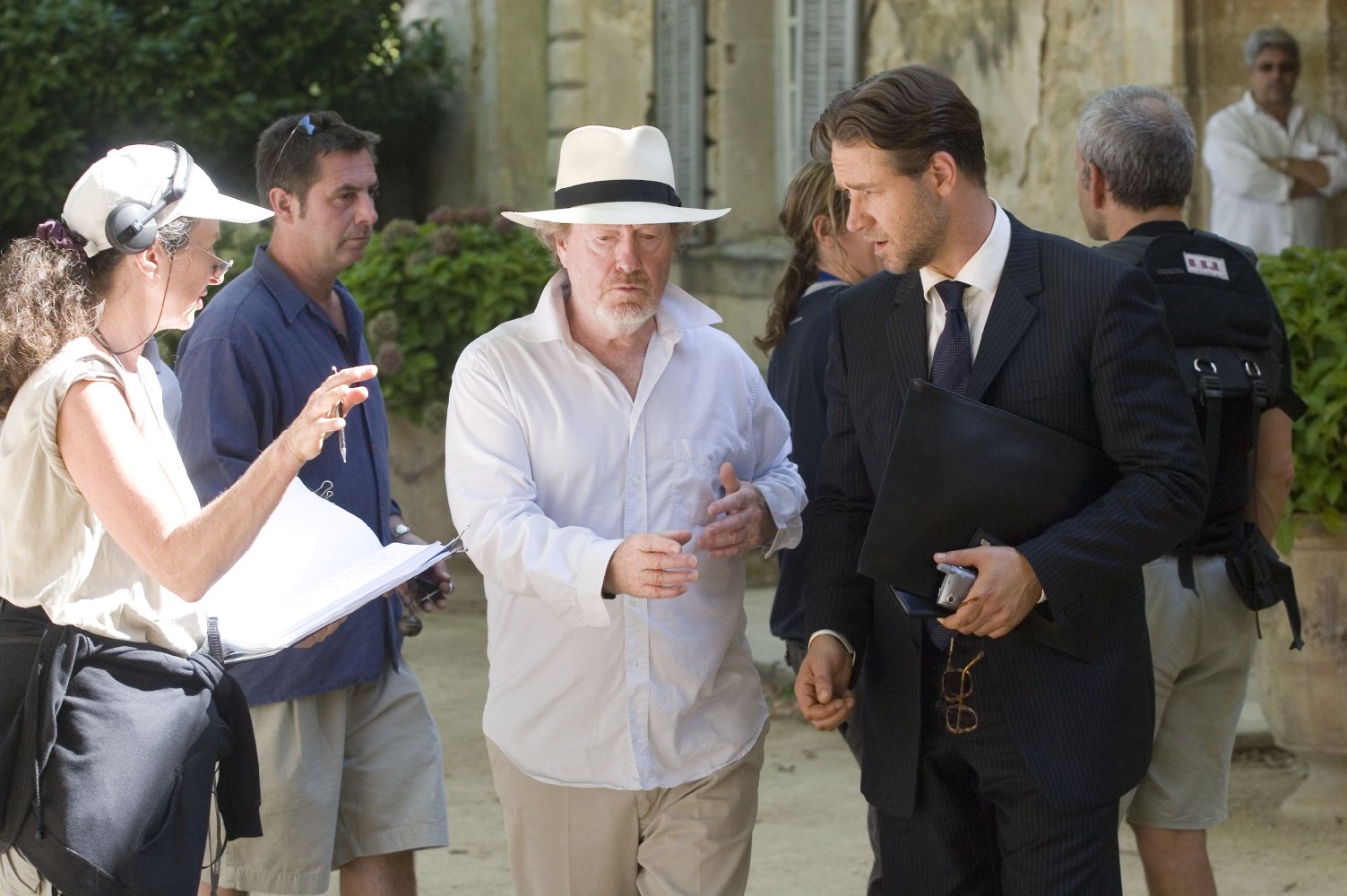
I think Russell [Crowe] did brilliantly in A Good Year (2006). He and I loved that film and Fox love...Show more »
I think Russell [Crowe] did brilliantly in A Good Year (2006). He and I loved that film and Fox loved it and then they didn't know what to do and we got beaten up. Russell got beaten up mercilessly, which I thought was disgraceful because I genuinely thought we had done a good movie about a man in transition which is also quite funny. And what's really irritating and annoying is that I kept getting told later by actors, journalists, people outside of the industry, how much they enjoyed it. So anyway, fuck 'em. It was a good film. Show less «
I'm from the generation that climbed trees, fell out of trees, broke my arm, my foot, my fingers, fe...Show more »
I'm from the generation that climbed trees, fell out of trees, broke my arm, my foot, my fingers, fell in the sea, nearly drowned. To design a catapult was hi-tech. Today, kids don't do that. They probably play soccer but for the most part they're button-pushing. I just hope they have as much fun as I did. [2016] Show less «
I was out of the era of Mad Men (2007),... We were really inventing modern advertising and modern co...Show more »
I was out of the era of Mad Men (2007),... We were really inventing modern advertising and modern communications. The big question always to me when making a movie now is, "Am I communicating?" And if you're not communicating you won't have a film do business and our business is about commerce, not art. (...) People at that time said TV commercial breaks were better than the programs. (...) In doing that, I learned to address the most basic question: Am I communicating, or am I going over your head? And that's what all filmmakers face. (...) I stayed in it for 20 years because I just loved it. (...) I was working in film, working on celluloid, I was working in quick time. They were very competitive days. Today you're considered busy if you're doing 12 bits a year; in those days I would be doing, personally, 100 commercials a year, averaging two a week. And they were big. (...) I was obsessed with commercials. And the ones we made 30 years ago are pretty good today. They don't age. I would obsess over details, not just who the actor was, or how beautiful the model was. (...) But I also learned about process, which is everything. (...) You can talk yourself blue in the face at film school, you can talk yourself blue in the face at drama school, but you'll never learn till you go out and do it. You can converse all you want about the mountain, but till you get on it, and start climbing, you don't know shit. (...) At that time, we were influencing the way feature films looked, but I was always criticized for being too visual. (...) They said it was too beautiful, too image-driven. And I thought, "What the f- does that mean?" Just because I could shoot better than most people - which is what made me such an employable commercial director - didn't mean I wasn't interested in story. I still feel that way. I'm not making a radio play, I'm making a movie. [Variety 2015] Show less «
[on The Martian (2015)] Buried in the film is a life lesson: God helps those who help themselves. It...Show more »
[on The Martian (2015)] Buried in the film is a life lesson: God helps those who help themselves. It's a tremendous example of effort and ingenuity and courage in the face of imminent death. It's as tough as climbing Mount Everest, really. In a slip you can die. [2016] Show less «
I'm a moviemaker, not a documentarian. I try to hit the truth.
I'm a moviemaker, not a documentarian. I try to hit the truth.
Avatar (2009), when you think about it, is almost a completely animated movie.
Avatar (2009), when you think about it, is almost a completely animated movie.
Blade Runner (1982), was a disaster. It didn't play. People didn't get it. I was way ahead, is what ...Show more »
Blade Runner (1982), was a disaster. It didn't play. People didn't get it. I was way ahead, is what I think it was. I knew it was really good. I just thought, "What the hell? They just don't get it." That was when I learned to move on and not read press. Don't read press. You can't read press - it'll destroy you. [2015] Show less «
[on his recreation of the trench sequence in Paths of Glory (1957) as a student] Yes, I made this......Show more »
[on his recreation of the trench sequence in Paths of Glory (1957) as a student] Yes, I made this...this was in the 60s with the BBC. Of course it was never aired, Kubrick would sue me, but I've always had tremendous respect for him. Show less «
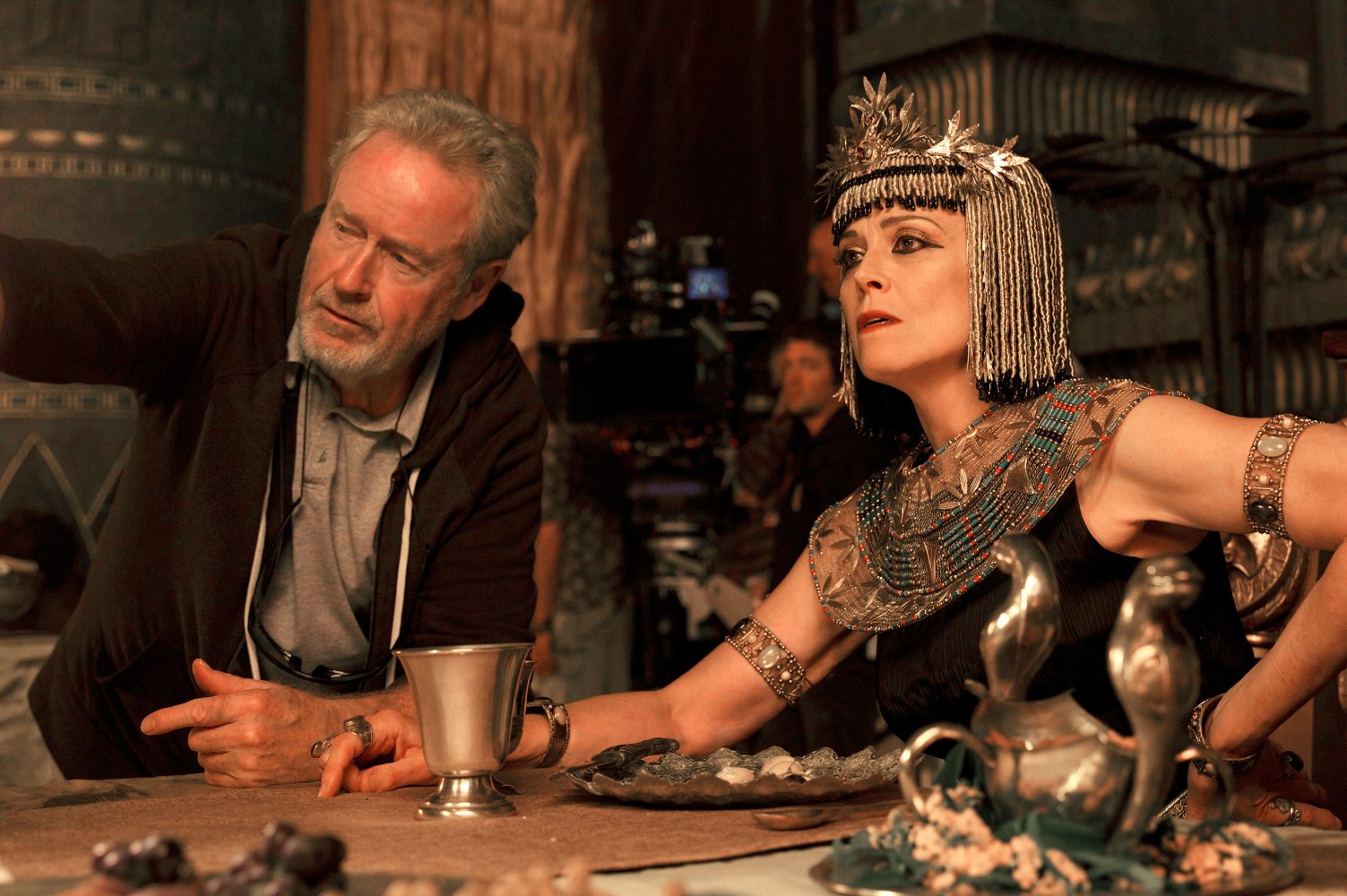
[on Exodus: Gods and Kings (2014)] I can't mount a film of this budget, where I have to rely on tax ...Show more »
[on Exodus: Gods and Kings (2014)] I can't mount a film of this budget, where I have to rely on tax rebates in Spain, and say that my lead actor is Mohammad so-and-so from such-and-such. I'm just not going to get it financed. So the question doesn't even come up. Show less «
[screenwriter William Monahan] is maybe one of the two best writers I have ever worked with and I am...Show more »
[screenwriter William Monahan] is maybe one of the two best writers I have ever worked with and I am developing something with him now that will take us back to Muslim countries next year. It's called "Tripoli", is set in 1805 and is about the bad behavior of Pasha of Tripoli, who was kidnapping ships, particularly American ships, and demanding ransoms while Jefferson was broke, having emptied his coffers of $11 million to complete the Louisiana Purchase from Napoleon, who needed the money to feed his army. It is a fascinating period. [2006] Show less «
Audiences are less intrigued, honestly, by battle. They're more intrigued by human relations. If you...Show more »
Audiences are less intrigued, honestly, by battle. They're more intrigued by human relations. If you're making a film about the trappings of the period, and you're forgetting that human relationships are the most engaging part of the storytelling process, then you're in trouble. Show less «
We're suffering from saturation, overkill. The marketplace is flooded by demand, and there are too m...Show more »
We're suffering from saturation, overkill. The marketplace is flooded by demand, and there are too many films, so everything gets watered down. Demand is the boss and everything bends to that will. Bigger and not necessarily better shows seem to be the order of the day. I can't watch most of them. [August 2005] Show less «
[on cinematographer Dariusz Wolski] Dariusz has a great eye and great taste. He is a great camera op...Show more »
[on cinematographer Dariusz Wolski] Dariusz has a great eye and great taste. He is a great camera operator. I think any cinematographer should operate the camera occasionally; if you don't, you don't understand the frame. Dariusz likes the storyboards; he loves to know what we're doing, because he has to prep it. We always work with multiple cameras. With Dariusz, it's usually four, but if it's complicated, it's five to eight cameras. It's knowing where to place them. We shot The Martian (2015) in 72 days. Normally it would be 100 to 110. Part of that is multicamera, part of it is knowing what you're doing. You can't walk in every morning and say, "Let's talk about this scene." Are you kidding me? You can't do that. [2015] Show less «
[on the source novel of Blade Runner (1982), Philip K. Dick's "Do Androids Dream of Electric Sheep?"...Show more »
[on the source novel of Blade Runner (1982), Philip K. Dick's "Do Androids Dream of Electric Sheep?"] It almost bears no relation at all. I met with Philip and he was angry, because I told him I couldn't get through the book. I thought I'd better repair this, so I invited him to see rushes and he was absolutely stunned by them. Show less «
[on Blade Runner (1982)] I'm curious about doing a sequel. There's something in the android that liv...Show more »
[on Blade Runner (1982)] I'm curious about doing a sequel. There's something in the android that lived. Show less «
The fundamental of anything as a director is material, material, material - script, script, script -...Show more »
The fundamental of anything as a director is material, material, material - script, script, script - once you have the script everything else is straightforward. Show less «
The person that probably stopped me in my tracks as a child - because I used to love to go to the ci...Show more »
The person that probably stopped me in my tracks as a child - because I used to love to go to the cinema - was David Lean with Great Expectations (1946). I thought everything was somehow better than most of the other movies in terms of the way it looked - the way it was dramatized and the way it was photographed. In fact, he was detailed from corner to corner and that is what I picked up with John Ford and then Kurosawa [Akira Kurosawa], then Carol Reed, Michael Powell - those were all the fundamental characters at that time - and Orson Welles, of course. There are Frenchmen, too, of course, who will be remembered as well, but I wasn't open to the French cinema at that point, so it was American and English film directors. So those were the influences. Show less «
[on editor Pietro Scalia and The Martian (2015)] The important thing for the editor is coverage. Tha...Show more »
[on editor Pietro Scalia and The Martian (2015)] The important thing for the editor is coverage. That's why I always have multiple cameras, so I can shorten the scene. Half the time it's about shortening and refining. Drew Goddard's script was very well done. But if you have a scene that's four minutes and you think it's got to be two minutes, you can't do that unless you've got cuts. Pietro understands the process. He has brilliant instincts. [2015] Show less «
I'm blessed with a great eye, and I always have been. It even got in my way because I used to be cri...Show more »
I'm blessed with a great eye, and I always have been. It even got in my way because I used to be criticized for being too visual. I would say, "Well, hold on. I'm not making a bloody radio play! I'm making a movie." What I have is an advantage, and I'm constantly looking for a way of evolving and avoiding what I've done before. [2015] Show less «
[on test screenings for The Martian (2015)] I have to sit in on the test screenings. It's part of th...Show more »
[on test screenings for The Martian (2015)] I have to sit in on the test screenings. It's part of the process. We did five, actually. In the five screenings we had, we rated in the 90s, which is almost unheard of. That usually happens with riotously funny comedies, but we're a drama with some amusing stuff. It was an indication that we were in good shape. [2015] Show less «
I like the competition. You create a competition with yourself. I'm very competitive. Very. I look a...Show more »
I like the competition. You create a competition with yourself. I'm very competitive. Very. I look around and think, I've got to raise the bar. That's what we do. If we can all raise the bar in everything we do, isn't that better? I try and raise the bar every time I do a movie, and a part of that is not to repeat yourself. It's an internal ego, not an external ego. [2015] Show less «
I'm not criticizing Hollywood because I work there, I partly live there. But I'm saying this is the ...Show more »
I'm not criticizing Hollywood because I work there, I partly live there. But I'm saying this is the way it is, commerce is taking over art. Commerce has become the most important thing in the film industry. Hollywood is an industry, it's not an art form, therefore they have to address the bottom line. But in a way it's sad when you get a remake, isn't it? Show less «
When I first said I wanted to make a film about Rome and cast Russell Crowe, everyone had a good old...Show more »
When I first said I wanted to make a film about Rome and cast Russell Crowe, everyone had a good old snigger. I thought, "You wait." They've done the same with Kingdom of Heaven (2005) and Orlando Bloom. I now say, "Take a look at this.". Show less «
I think movies are getting dumber, actually. Where it used to be 50/50, now it's 3% good, 97% stupid...Show more »
I think movies are getting dumber, actually. Where it used to be 50/50, now it's 3% good, 97% stupid. Show less «
[on directing] You prove how reliable you are. Which I am, I always have been - it's part of my thin...Show more »
[on directing] You prove how reliable you are. Which I am, I always have been - it's part of my thing. [2016] Show less «
I applied to the Royal College of Art after my first degree at West Hartlepool College of Art [1954-...Show more »
I applied to the Royal College of Art after my first degree at West Hartlepool College of Art [1954-1958] - the RCA was top of the list as the most acclaimed art college at that time. I had realised I would never make a painter - there were arguments about whether or not my paintings were paintings or illustrations. The RCA had a particularly strong Graphic Design Department, which would give me a more specific creative target and a broader canvas. I was thrilled to be accepted, starting autumn 1958 and finishing in 1961 duating with an M.A. in Graphic Design]. 'Television and film design' and photography were just beginning to happen, and America was becoming a big influence. I was struck by the level of professionalism and the highly competitive nature of Graphic Design at the RCA. All students were of a very high standard. Putting us all together was the beginning of my being aware of the competitive nature of my chosen profession. I realised from very early on that I would have to fight hard and do very well if I was going to make it. One was pretty well left to it. The mood of the College at the time was rebellious and politicised, [as well as] studious and introverted. It could be very competitive, with not much being given away and everything kept close to your chest. You observed all the time, watched what everyone else did and tried to do better and be the most original. During the Richard Guyatt era of Graphic Design, it wasn't easy for a student to work with type and photomontage. Nothing was easy. Nothing worth achieving ever is. Show less «
[on Prometheus (2012)] When the first Alien (1979) movie and Blade Runner (1982) were made. I though...Show more »
[on Prometheus (2012)] When the first Alien (1979) movie and Blade Runner (1982) were made. I thought that in the near future the world would be owned by large companies. That's why we have the Tyrell Corporation in Blade Runner (1982) and Weyland-Yutani in Alien (1979). They sent the Nostromo spaceship. The Prometheus is owned by an entrepreneur called Peter Weyland, who is played by Guy Pearce. That's the connection between the two films, and nothing more. Show less «
The truth is that technology is moving so quickly that the high-end 2D [high-dynamic range] nearly m...Show more »
The truth is that technology is moving so quickly that the high-end 2D [high-dynamic range] nearly makes 3D redundant. We shot and edited The Martian (2015) on 3D and it was pretty straightforward if you've got the right team, and [cinematographer] Dariusz Wolski is great. From my point of view, I can just have fun making 3D pictures. But now with 2D becoming so great, you really have to ask yourself if you need it. [2015] Show less «
[on directing blockbusters] You want big films and stories to keep people going to the cinema. It's ...Show more »
[on directing blockbusters] You want big films and stories to keep people going to the cinema. It's up to us to keep the bar raised. That's the trick. I've always done that. (...) It is brain surgery! It is bloody brain surgery! You're putting together a whole group of people, you're trying to budget as accurately as you can and, at the end of it, you've got to sell a lot of tickets. That's more complex than banking - but a few of us manage to pull it off. (...) I'm not kidding myself: I love the challenge. If you don't, don't do the job. [2016] Show less «
I'm a yarnteller. My job is to engage you as much as I can and as often as I can. I love the process...Show more »
I'm a yarnteller. My job is to engage you as much as I can and as often as I can. I love the process and still continue to adore the process, actually. I don't get attached to anything. I'm like a good antique dealer. I'm prepared to sell my most valuable table. Show less «
I used to agonize over what to do next, but now I make a movie a year.
I used to agonize over what to do next, but now I make a movie a year.
Balian [Orlando Bloom's character in Kingdom of Heaven (2005)] is an agnostic, just like me. I am no...Show more »
Balian [Orlando Bloom's character in Kingdom of Heaven (2005)] is an agnostic, just like me. I am not fighting another holy war here, I am trying to get across the fact that not everyone in the West is a good guy, and not all Muslims are bad. The tragedy is that we still have a lack of understanding between us, and it is 900 years since the Crusades. We have never truly resolved our differences. Show less «
[on why his movies don't have sex scenes] Sex is boring unless you're doing it.
[on why his movies don't have sex scenes] Sex is boring unless you're doing it.
[About his movies] I think a landmark would have to be The Duellists because it got me going and eve...Show more »
[About his movies] I think a landmark would have to be The Duellists because it got me going and everybody was surprised that I could make a two-hour movie. It was criticized, but that's when I stopped reading all my press because they said it was too pretty... I was like: F**k you! It rained for 58 days and that's why it looked like it was gauze. It wasn't gauze at all. It was a very beautiful film but I took that criticism on board and started to question what I do well. But eventually I just thought "f**k it, I'll do what I have to do and that's that" and I will evolve in my own time. I think Alien was a landmark - it's one of the really good science fiction movies. Blade Runner was pretty f**king good too. I'm dong pretty good! Legend I thought was but I jumped the gun and simply started doing fantasy 25 to 30 years too soon... White Squall and Someone To Watch Over Me are, I think, both really nice little movies. I think it came off someone saying in my office, because Legend didn't work and Blade Runner didn't work: "Why don't you make something about ordinary people?" So, I went off and made these two smaller movies, which I think, actually, turned out pretty well. But gradually I realized that what I do best is universes and I shouldn't be afraid of that. That's what I do great. So, the universe of Black Hawk Down is still, for me, the best war film coming out of that region. Show less «
[on production designer Arthur Max and The Martian (2015)] The key is to always kick off a creative ...Show more »
[on production designer Arthur Max and The Martian (2015)] The key is to always kick off a creative conversation on what each scene can be. Then Arthur will go away and research it with the digital artists; they'll come back with a digital representation of the set. That also happened for the spacesuits. They're tricky; they're industrial design because they have to breathe. I didn't want to repeat Alien (1979) or Prometheus (2012). I never want to repeat anything. We also set up 30 GoPro cameras inside the habitat. Those took the form of being a buddy or companion to Mark Watney (Matt Damon). So there was Matt talking to the camera - what I called ship's log, like Captain Kirk. We wanted to avoid voiceover because it's tricky. It's better to have Matt talking to himself. To represent NASA, there was a building on the edge of the Danube, the most modern building in Budapest. I would drive past it and think, "We better look at that, because I can't find NASA." It was perfect - a giant space, used for events, with a giant tube roof. [2015] Show less «
People say a good score is when you don't notice it. I say bullshit. I'm very conscious of a good sc...Show more »
People say a good score is when you don't notice it. I say bullshit. I'm very conscious of a good score and I'm very conscious of a bad score. And anyone who says that simply doesn't know music. Show less «
I learned years ago that a great script ain't gonna land on your desk. When I'm not working I'm also...Show more »
I learned years ago that a great script ain't gonna land on your desk. When I'm not working I'm also constantly developing material. But this [The Martian (2015)] came to me in one of those rare occurrences. I've been with Fox more than 12 years now, and there's a first-look deal. They came to me and said, "Look, we've got this script and you might want to look at it." I read it and was highly entertained and also impressed that it covered all four quadrants of emotion. [2015] Show less «
-
Ridley Scott's FILMOGRAPHY