-
-

-
- HOME
- MOVIES
- TV-SERIES
- WATCHED
- LAST ADDED
- RELEASE
-
GENRES
- All
- Action
- Adventure
- Animation
- Benefit concert
- Biography
- Christmas
- Comedy
- Costume
- Crime
- Documentary
- Drama
- Family
- Fantasy
- Game-Show
- Historical fiction
- History
- Horror
- Kung-Fu
- Music
- Musical
- Mystery
- Mythological
- News
- Psychological
- Reality-TV
- Romance
- Sci-Fi
- Short
- Sitcoms
- Sport
- Stand-up Comedy
- Talk-Show
- Thriller
- TV Show
- War
- Western
-
COUNTRY
- All
- Afghanistan
- Argentina
- Armenia
- Asia
- Australia
- Austria
- Bahamas
- Bangladesh
- Belgium
- Belize
- Bolivia
- Bosnia and Herzegovina
- Brazil
- Bulgaria
- Cambodia
- Canada
- Chile
- China
- Colombia
- Croatia
- Cuba
- Czech Republic
- Denmark
- Dominican Republic
- Euro
- Finland
- France
- Georgia
- Germany
- Greece
- Hong Kong
- Hungary
- Iceland
- India
- Indonesia
- International
- Iran
- Ireland
- Israel
- Italy
- Japan
- Jordan
- Kenya
- Korea
- Lebanon
- Lithuania
- Luxembourg
- Malaysia
- Mali
- Malta
- Mexico
- Mongolia
- Morocco
- Netherlands
- New Zealand
- Nigeria
- Norway
- Pakistan
- Palestine
- Panama
- Peru
- Philippines
- Poland
- Portugal
- Romania
- Russia
- Samoa
- Senegal
- Serbia
- Singapore
- Slovenia
- Somalia
- South Africa
- South Korea
- Spain
- Sudan
- Sweden
- Switzerland
- Taiwan
- Thailand
- Trinidad and Tobago
- Turkey
- Uganda
- Ukraine
- United Arab Emirates
- United Kingdom
- United States
- Uruguay
- Venezuela
- Vietnam
- TOP-IMDB
-
FeedbackFeedback about this page?CancelSend feedback
-
Filter
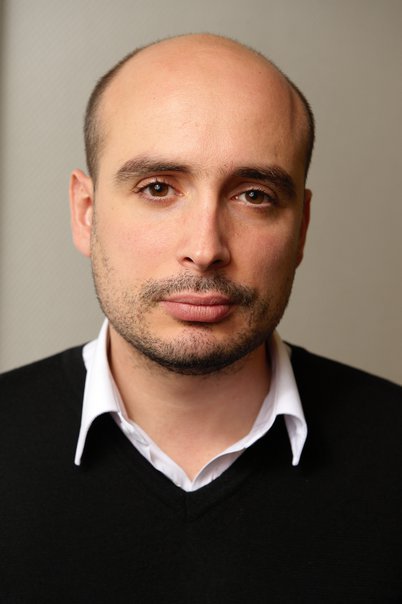
Peter Strickland
Birthday: 1973, Reading, Berkshire, England, UK
Peter Strickland was born in 1973 in Reading, Berkshire, England. He is a director and writer, known for Berberian Sound Studio (2012), The Duke of Burgundy (2014) and Katalin Varga (2009).
[on writing & directing Katalin Varga (2009)] For me, this film represents a movie Transylvania - bu...Show more »
[on writing & directing Katalin Varga (2009)] For me, this film represents a movie Transylvania - but not in the Dracula sense. Everything is heightened - the goat bells, crickets, wind ... It's a conglomeration of what I felt as an outsider. To help the certain intense atmosphere I wanted to capture, I listened to Pornography by The Cure and Suicide by Suicide on headphones endlessly during the writing process. I also watched Charles Laughton's The Night of the Hunter (1955) and Sergei Parajanov's Tini zabutykh predkiv (1965) again and again. All the ingredients for the film were in these and the Popol Vuh soundtrack to Werner Herzog's Nosferatu: Phantom der Nacht (1979).[2009] Show less «
[on finishing Katalin Varga (2009)] The shoot was difficult, but not as bad as expected. We had a ve...Show more »
[on finishing Katalin Varga (2009)] The shoot was difficult, but not as bad as expected. We had a very short and intense period of many people living together in one house with no beds, only sleeping bags, and one bathroom in a small village in the Carpathian mountains. There was just one grocery store and a small bar. The period up until the end of shooting was very romantic and exhilarating for all of us. There was a strong feeling of 'us against them' because we were outside the film industry fighting to do something on our own terms. We really wanted to work within the industry, but we never got that chance. Now I'm glad it worked out that way. Whatever happens to me or the film, nobody can tarnish those memories. I just can't imagine how the shoot would have been if we turned up in trucks and taxis with line producers from Soho bringing their supplies of sushi and pomegranate juice. That was the best time. But what is usually ignored by newspaper articles on the making of films is the paralysing fear when you get home and wait and wait for something to happen. Film-making isn't difficult: it's the waiting and fear of failure that is. People ask me how I survived shooting in the Carpathian mountains. What they should really ask me is how I survived living in Reading afterwards. I was out of money and luck. I had made a feature film but couldn't afford to edit it. It was a terrible period of depression and frustration. With digital technology, everyone has a film in their pocket. How are you going to convince producers to spend an hour watching what you've shot when hundreds of others are doing the same? I'm not trying to put people off making films, but when you see how many hundreds of people are hustling at festivals and elsewhere just to have their work looked at, it's quite daunting. I was very naive, thinking that if I sent a rough DVD copy to festivals, it would be accepted. My God, was I wrong! I've always had to balance projects with normal jobs to survive, but it's very difficult to find the mental energy to write when you get home from work. During the darkest days of post-production, I craved a producer to take the weight off my shoulders. The biggest irony about recent events [the success of his debut film] is that I haven't changed, but I'm viewed more sympathetically by certain people, whereas a year ago, I was essentially seen as a leech. 'Oh God, it's that kid from Reading always hassling me to see his film'.[2009] Show less «
[on self-financing the Katalin Varga (2009) shoot in Romania 2006 for £25,000] I was relatively wea...Show more »
[on self-financing the Katalin Varga (2009) shoot in Romania 2006 for £25,000] I was relatively wealthy for the first time in my life [an inheritance from his uncle] and realised that this might be my only chance to make a feature. Almost everyone said I was insane, suicidal, deluded, etc, and that it's impossible to make a film for less than £200,000 even in Romania. I had barely a third of that. There were many times when I seriously doubted what I was doing. I often thought of just buying a flat, as almost everyone advised. But I asked myself, 'Should I buy myself a one-bedroom flat in Bracknell or should I make a revenge film in Transylvania?' I think the main thing that kept me going was knowing that if I bought a flat, I would always wonder, 'What if?' Even if I failed, I would know I tried my very best.[2009] Show less «